

The Absorbent Mind
How children from birth to age six unconsciously take in their environment and learn at a remarkable rate.
Pick the monthly plan that fits. Your website build is included — we'll take it from there.
We run your website for you.
We run your front desk for you.
We run your front office for you.
You'll be taken to secure card checkout (Stripe) for your monthly plan — your website build is included. Texting switches on once the carriers approve your registration, usually 1–2 weeks. See everything in each plan →
Online checkout isn't available right now, so we'll reach out shortly with your secure payment link and launch timeline.
Your full site build is underway. Watch your email for your owner-portal invite and launch timeline — we'll take it from here.
In the specially prepared environments of Montessori schools, children themselves found the words for their inner need: “Help me to do it by myself!” Dr. Maria Montessori also wrote, “The child can only develop by means of experience in his environment. We call such experience work.”
The Montessori method dates back to the late nineteenth century. Dr. Maria Montessori was the first woman to earn a Doctor of Medicine degree in Italy. As a physician, her first educational encounter with children took place in a psychiatric clinic in Rome, where she worked with children who were labeled in that era as “mentally retarded.” Rather than seeing only limitations, Dr. Montessori recognized their potential and capabilities. Through careful observation and experiment, she concluded that their minds had never been stimulated. They had been locked away with no sensory stimulation whatsoever. From that realization, her approach began to take shape.
It became a unique method of education designed to take advantage of the child’s sensitive periods—the time between birth and six years of age, which has been found to be the most impressionable. Dr. Montessori called this the absorbent mind: the young child unconsciously soaks up information from the environment, learning about it at a rapid rate. This ability is unique to the young child and significant to the development of the whole being. The impressions made on a child’s mind actually shape and form the child emotionally, cognitively, and behaviorally.

During the sensitive period of life, Dr. Montessori observed, a child discovers by touching, seeing, smelling, tasting, and exploring. She came to believe that all children have an inborn motivation to learn—an innate desire that is fulfilled through their senses. In fact, a child cannot be stopped from doing so. Identifying these universal characteristics of childhood, she devised educational materials and methods based on her belief that children learn best by doing. In her time, this was quite different from the conventional approach, in which children passively accepted other people’s ideas and preexisting knowledge. Plain listening, she concluded, was not enough to stimulate, cultivate, and develop the young mind. That insight lies at the basis of Dr. Maria Montessori’s new method of teaching.
The Montessori method gained great recognition all over the world. It grew out of Dr. Montessori’s discovery of the importance of the school environment and the role it could play in changing a child’s behavior. Putting together all the other aspects of child development she had learned, she created the “prepared environment”—a dynamic, interactive learning environment that encourages each child to reason, cooperate, collaborate, negotiate, and understand.
The prepared environment is a place of thoughtful planning, attention to detail, and an intricate blend of order and purpose. The materials, each with its own developmental skill, are displayed in a way that keeps the environment accessible, inviting, and in proper order. This system of preparation is continually perfected to rouse and sustain the children’s attention. In an address to the National Education Association in 1915, Montessori said, “To be able to choose objects that will interest and hold the attention of the child is to know the means of aiding it in its mental growth.” In a second newspaper article, she wrote, “Little novel occupations were everywhere available. I was like a Turk in a bazaar.”
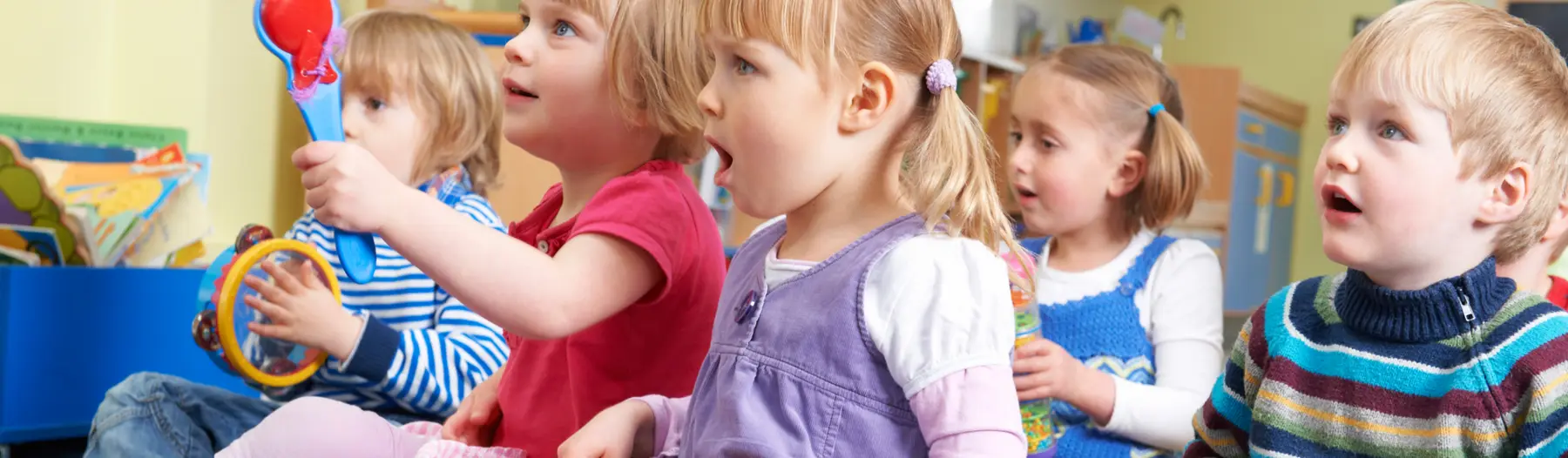
Within this environment, the child has the freedom to move about the classroom, to be independent, and to work with what interests him at his own pace. As each task becomes mastered, patterns of concentration and inner discipline evolve. This becomes a lifelong attribute—a building block laid down early in life. It is a wonderful habit: to be adamant is to succeed. Using the example of a child working with cylinders, Dr. Montessori explained, “That which interests the child is not only the sense of handling the objects, but the conscious acquisition of a new power of discrimination, that of recognizing the differences of dimensions among cylinders, the differences which at first he did not perceive.” With the materials she devised, and with the guidance of the teacher, the Montessori method was a success. The basic concepts introduced—arranging objects from large to small, top to bottom, left to right, and concrete to abstract—developed skills that became fundamental building blocks for the complex reading, writing, and mathematics that lay ahead.
In 1906, Dr. Montessori founded her first school in a large tenement house in the slums of San Lorenso, Italy. She called it “Casa Dei Bambini,” which in Italian means the Children’s House. There she put her ideas to the test. It soon became evident that all children were capable of learning through her developmentally appropriate approach. The method succeeded with children from all walks of life, regardless of background or intellect.
Montessori soon received international fame and recognition. Educators from all over the world came to see for themselves this new approach to teaching young children. Amazed by what took place in the Children’s Houses, they introduced and implemented the principles of the Montessori approach in their own school systems. Along with that, they acquired a new vision of the true nature of the child. As Maria Montessori put it, “Prepare to encounter a creature of quiet purpose. Behold a lover of detail who is naturally respectful, reasonable, and cooperative. This spiritual embryo, awaits only the quiet invitation of this amazing prepared environment, to come forth and use these offerings as they were intended.” The Montessori movement spread to many parts of the world.
Today there are over 5,000 Montessori schools in this country alone, as well as many others in more than 80 countries throughout the world. Many of these schools were started by parents who were concerned with their own children’s educational needs. For many years, Montessori schools were private, but because of the success of the method, there are almost 3,000 Montessori teachers teaching in public schools today—and even more teaching in private schools.
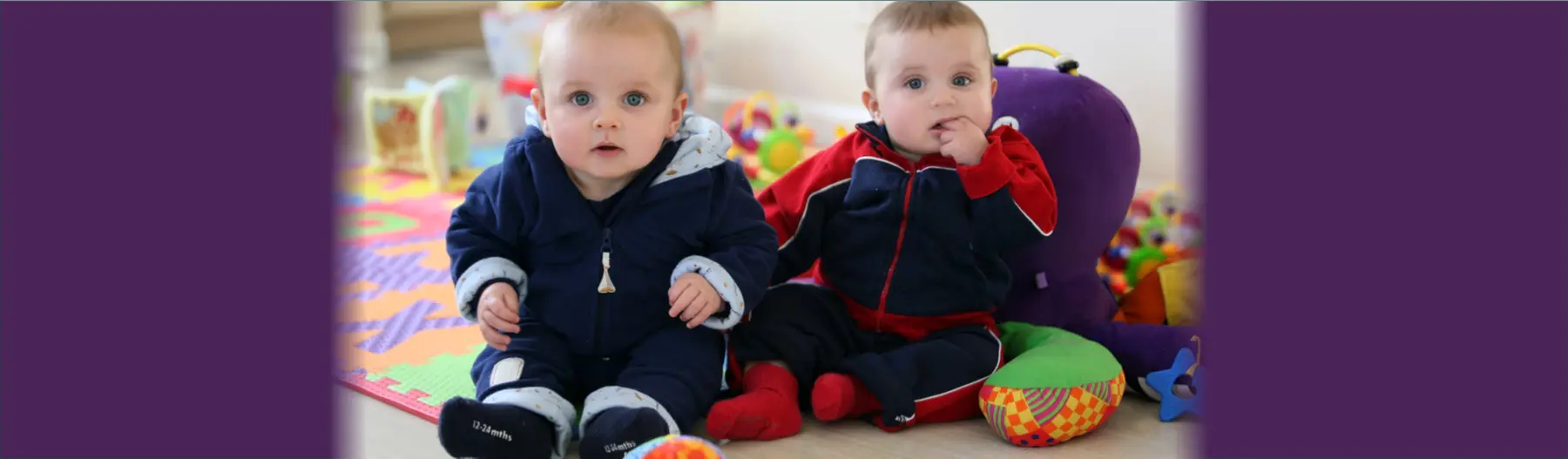
At the heart of the Montessori philosophy is a profound respect for the child’s individuality and uniqueness. Dr. Montessori said, “To stimulate life, leaving it free, to unfold itself…that is the first duty of the educator.” She believed each child is motivated from within by a natural curiosity and thirst for knowledge. For this reason, early education should focus on cultivating a child’s own natural desire to learn, rather than filling a child’s head with preexisting knowledge and facts from a preselected course of study. The Montessori method is child centered, created solely for the interests and needs of children. It introduces children to the joy of learning at an early age. As a result, children acquire habits of concentration, perseverance, and thoroughness, and they show a real and profound understanding of their work. The child builds the foundation for a lifetime love of learning, producing a confident and strong scholar. This academic foundation supports a framework in which emotional growth and individual and social discipline go hand in hand. In this sense, the Montessori approach is truly an “education for life.” Dr. Montessori understood that children need to acquire basic skills before participating in a competitive learning situation such as a traditional classroom. She said, “Never let the child risk failure until he has a reasonable chance of success.” At The Montessori School of Hamilton, children are given that chance of success, preparing each child to excel in the next school setting and helping every child develop to their fullest potential—spiritually, physically, and intellectually.
How children from birth to age six unconsciously take in their environment and learn at a remarkable rate.

The carefully ordered classroom that invites independence, concentration, reason, and discovery.
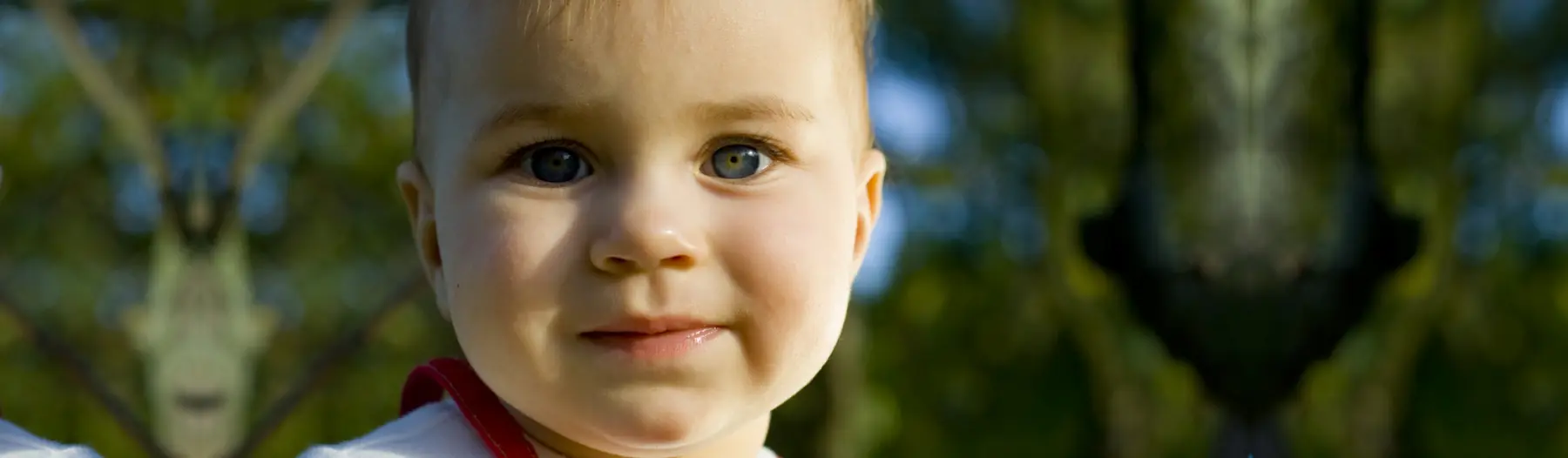
The guide who prepares the environment, observes each child, and supports natural development.